The Story
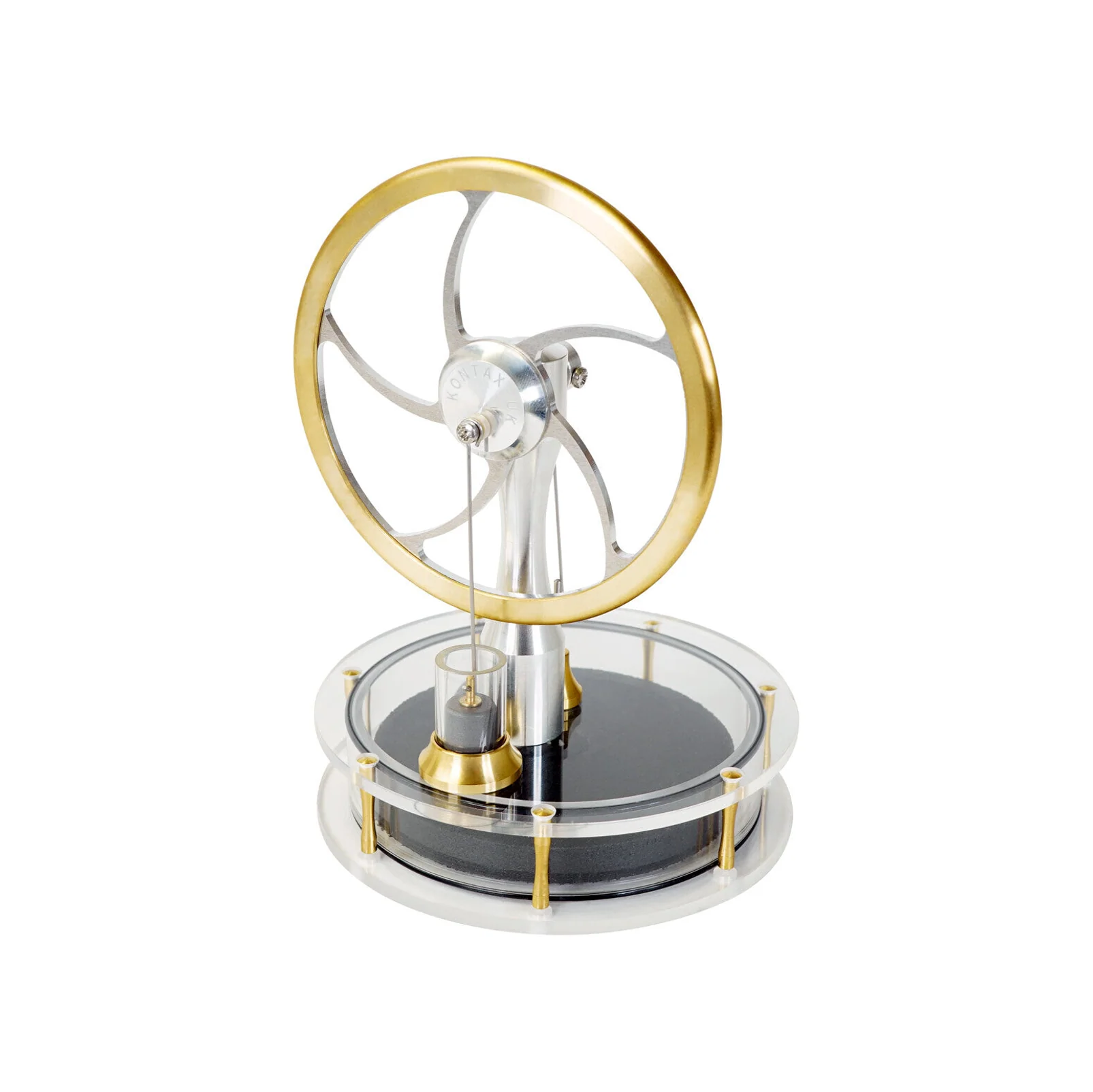
The original Low Temperature Stirling engine, with transparent acrylic plates in kit form. MADE IN UK
Solar-powered Low Temperature Stirling Engine
The Kontax KS90 solar acrylic Low Temperature Stirling Engine features transparent acrylic plates and is optimised for solar operation. The engine is designed in a gamma configuration, with the power piston and displacer disc connected at a 90° offset on either end of the central axle. Place it on a cool surface in the sun, such as a south-facing windowsill, and the sunlight hitting the top plate will power the engine. Alternatively you can position a small halogen or incandescent lamp near the top plate and the heat from the lamp will drive the engine.
How does it work?
Stirling engines work by cyclically heating and cooling the air inside the main chamber. As the air heats up it expands, and as it cools down it contracts. This expansion and contraction drives a small piston which in turn drives the flywheel. The clever thing about Stirling engines is that the mechanism for cycling the heating and cooling of the air is built into the engine in the form of the displacer, which is driven by the flywheel and crank arrangement and moves the air from the warm side to the cool side and back again over and over.
The Stirling engine is named after its inventor, Rev. Robert Stirling, who patented his idea in 1816.
Dimensions
Plates - 92mm diameter, 3mm thick (3.62" x 0.19")
Displacer - 70mm diameter, 7mm thick (2.75" x 0.27")
Flywheel - 82.5mm diameter, 4mm thick (3.25" x 0.16")
Power piston - 9.5mm diameter (0.375")
Overall height - 130mm (5.11")
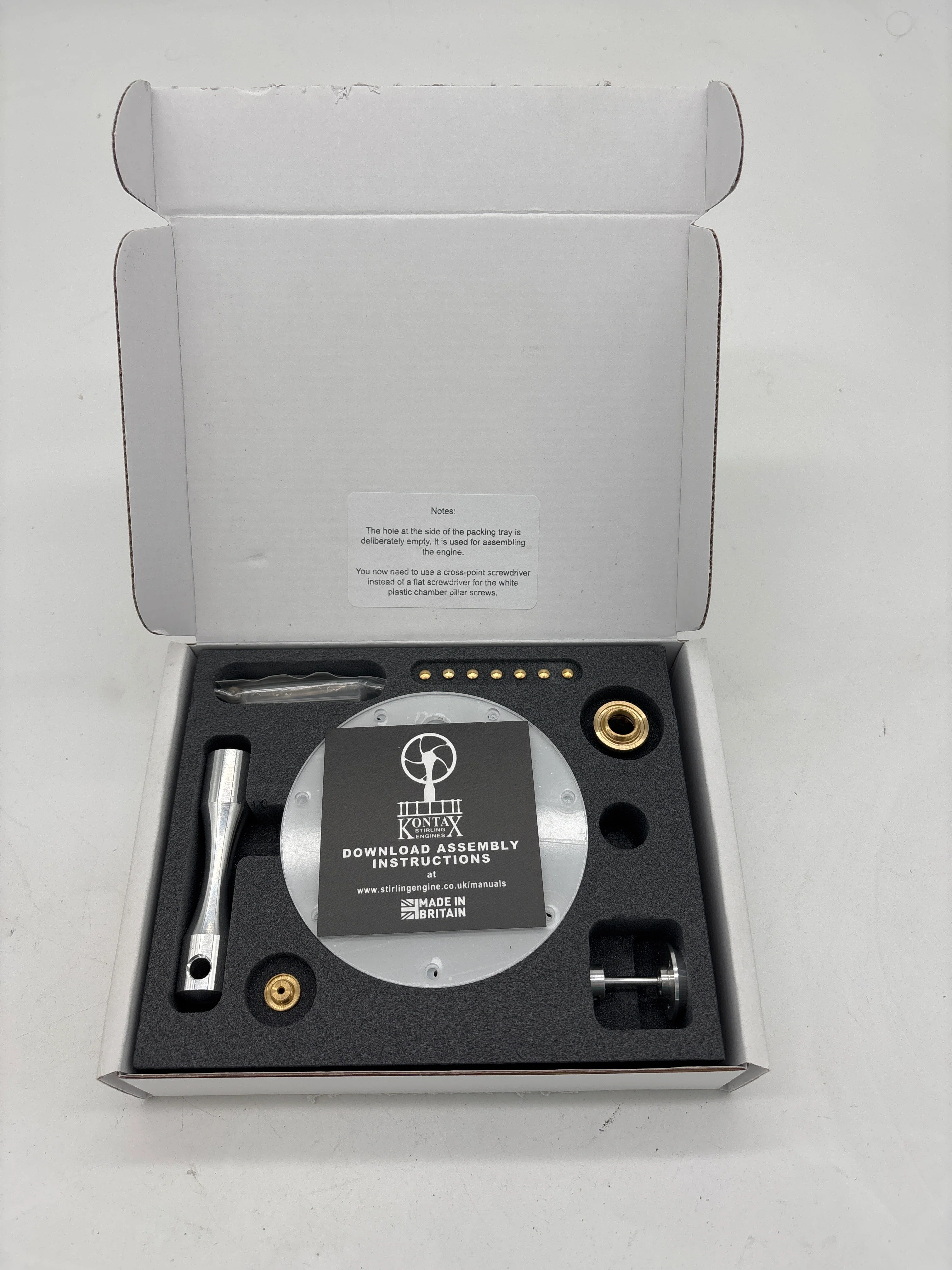
Assembly Instruction Manual Included
Details & Craftsmanship
Every detail has been carefully considered to bring you the perfect product.
Description
The original Low Temperature Stirling engine, with transparent acrylic plates in kit form. MADE IN UK
Solar-powered Low Temperature Stirling Engine
The Kontax KS90 solar acrylic Low Temperature Stirling Engine features transparent acrylic plates and is optimised for solar operation. The engine is designed in a gamma configuration, with the power piston and displacer disc connected at a 90° offset on either end of the central axle. Place it on a cool surface in the sun, such as a south-facing windowsill, and the sunlight hitting the top plate will power the engine. Alternatively you can position a small halogen or incandescent lamp near the top plate and the heat from the lamp will drive the engine.
How does it work?
Stirling engines work by cyclically heating and cooling the air inside the main chamber. As the air heats up it expands, and as it cools down it contracts. This expansion and contraction drives a small piston which in turn drives the flywheel. The clever thing about Stirling engines is that the mechanism for cycling the heating and cooling of the air is built into the engine in the form of the displacer, which is driven by the flywheel and crank arrangement and moves the air from the warm side to the cool side and back again over and over.
The Stirling engine is named after its inventor, Rev. Robert Stirling, who patented his idea in 1816.
Dimensions
Plates - 92mm diameter, 3mm thick (3.62" x 0.19")
Displacer - 70mm diameter, 7mm thick (2.75" x 0.27")
Flywheel - 82.5mm diameter, 4mm thick (3.25" x 0.16")
Power piston - 9.5mm diameter (0.375")
Overall height - 130mm (5.11")
Assembly Instruction Manual Included